How to look after a road gully
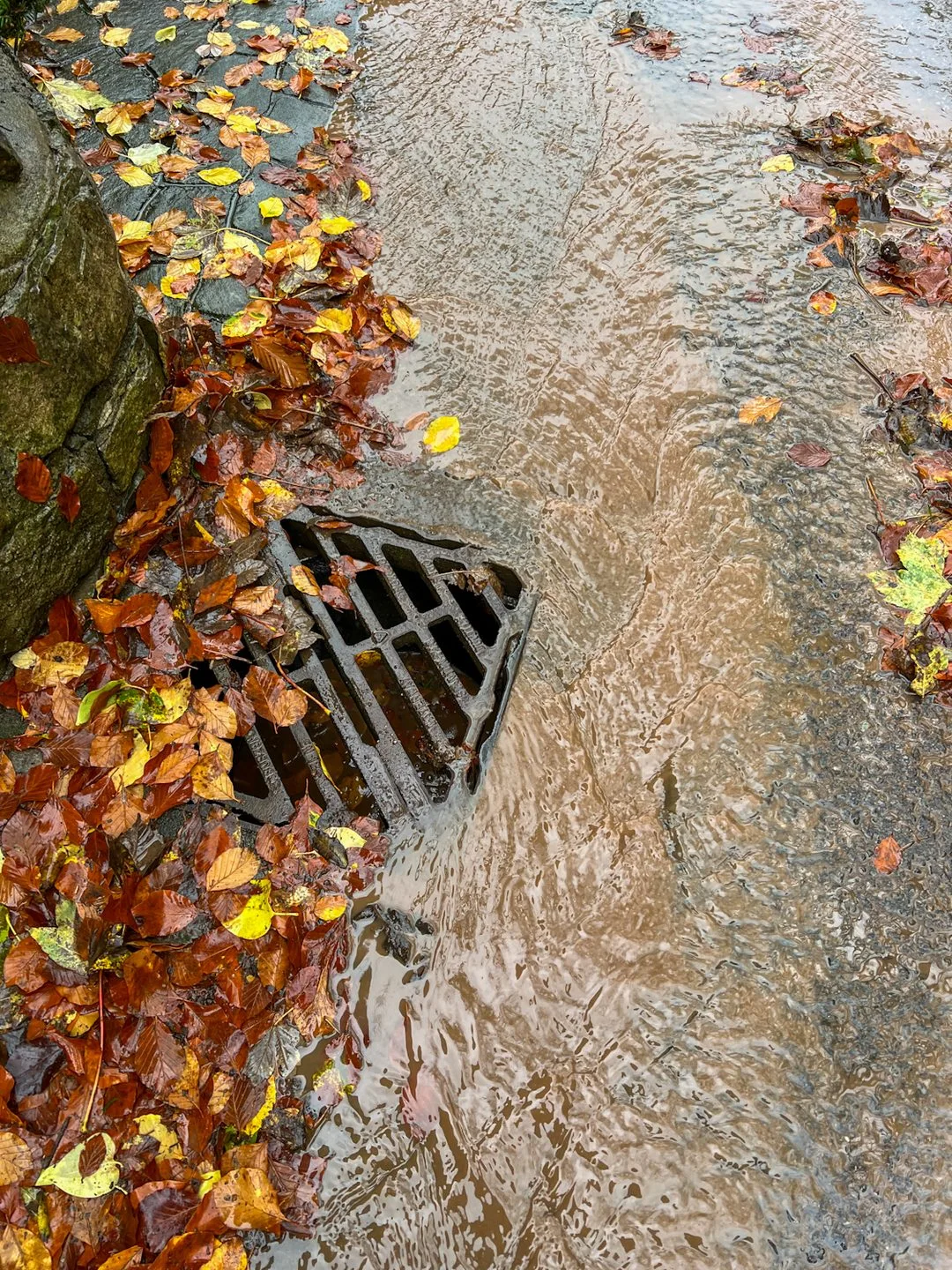
A few leaves can cover a kerbside grate just when rain needs somewhere to go. If a public gully is blocked, report it to the road authority. Only move loose surface leaves if you can do so safely.
If flooding is happening now
Stay well clear of floodwater and moving traffic. Never walk or drive through a flooded road. If someone is in immediate danger, call 999. For drainage faults and flooding, use the reporting contacts below.
What does a road gully do?
The metal grate beside the kerb is the part you see. Rainwater passes through it into a chamber and usually flows away through a pipe. Depending on the drainage system, it may reach a ditch, river, drainage feature or combined sewer. Water entering a gully can reach a watercourse without treatment.
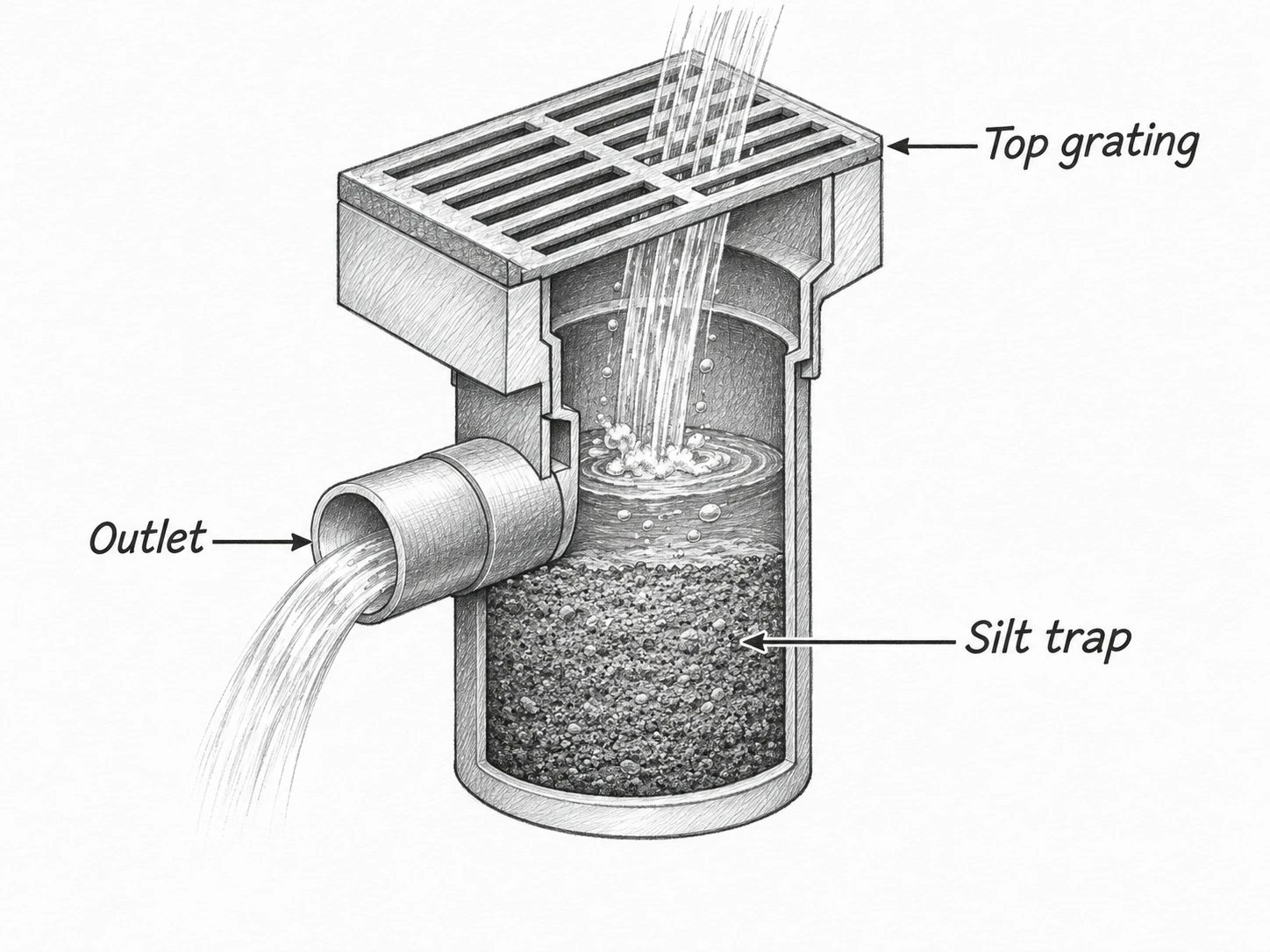
In a gully like this one, water stays in the bottom of the chamber between showers. When more rain enters, the water level rises to the side outlet and water flows away. If you can see water, silt or even vegetation through the grate, the gully may still be draining. A better sign of a problem is water repeatedly pooling on the road or coming back up through the grate.
Leaves can cover the grate. Flooding can also happen when enough silt builds up to obstruct the outlet, a pipe is damaged or heavy rain exceeds the capacity of the drainage system.
Who looks after it?
On a publicly maintained road, the road authority normally cleans and repairs the gully. You can report the gully outside your home even if it sits right against your boundary.
On a private road, driveway or development, check the deeds and maintenance agreements. The landowner, a management company or another body may look after the drainage. A public sewer can run under private land. If ownership is unclear, ask the sewerage provider or the body managing the road before paying for work.
A small job you may be able to do safely
Check your road authority’s advice about moving loose leaves off the surface. You can always leave them in place and report the problem.
- Pick a safe moment. Choose daylight, good visibility and dry, settled weather. Stay on a firm pavement or verge. If you would need to step into the road or a cycle route, reach across traffic or lean over water, stop and report it.
- Look before you touch. Leave broken grates, needles, glass, sewage, heavy deposits and unfamiliar material alone. Wear suitable gloves and sturdy footwear. Bright clothing can help others see you, but traffic is still a danger.
- Move only loose surface leaves. From a stable position, use a long-handled broom to draw leaves towards you. Keep your hands, feet and tools out of the slots. Leave the grate in place.
- Collect the leaves. Keep them out of the road, other drains and watercourses. Follow local waste guidance. Clean leaves may be suitable for composting, while road sweepings mixed with grit or litter may need separate disposal.
- Finish safely. Leave the pavement clear, clean your tools and wash your hands. Report water that stays on the road or a problem that returns.
Leave internal cleaning to the road crew. Never open a manhole, use drain rods or a pressure washer in a public gully, or pour chemicals into it.
When to report a problem
Report a missing, loose or broken grate straight away, especially if it leaves an open hole. Report water coming up through the grate, or water that repeatedly ponds on the road or stays there after rain.
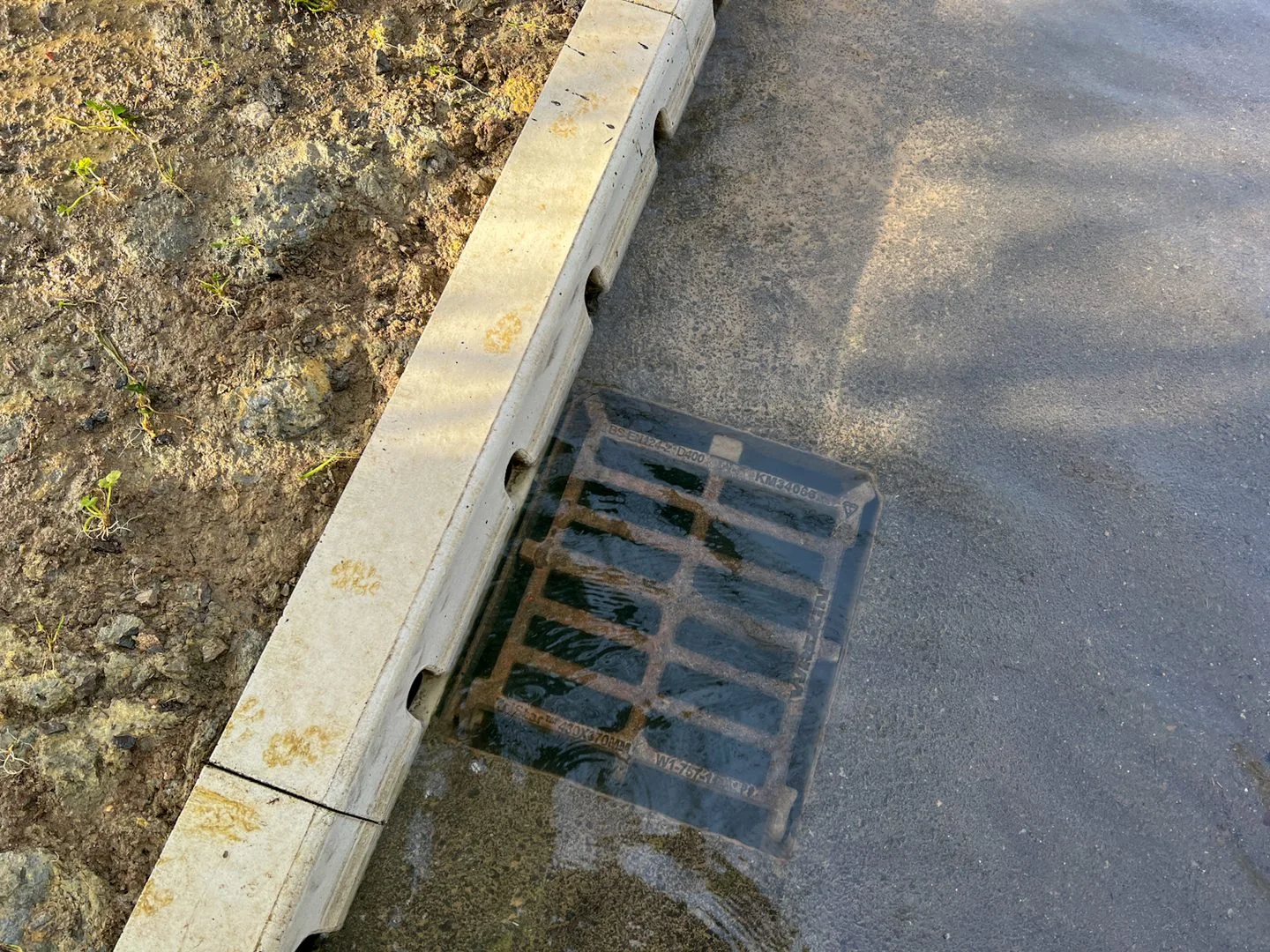
In this photograph, most of the grate is visible through the water. The picture alone cannot tell us whether there is a blockage in the chamber or pipe, or whether the outlet was temporarily overwhelmed.
Give the road name, nearest house number or landmark, time and a map location if you have one. Say whether water is affecting homes, pavements or traffic. Take photographs only from a safe position. Keep your report reference and quote it if things worsen. For an immediate road hazard, use the authority’s urgent phone line.
Where to report it across the UK
| Nation | Who to contact |
|---|---|
| England | For a local road, contact the council’s highways service. Find your council on GOV.UK. On a motorway or major A-road managed by National Highways, report a maintenance issue. For an incident on its network, call 0300 123 5000. |
| Wales | Contact the council for local roads. For a trunk road or motorway, report flooding or a drainage problem to Traffic Wales. For an urgent trunk-road hazard, call 0300 123 1213. |
| Scotland | Contact the council for local roads. For trunk roads and motorways, call the Traffic Scotland Customer Care Line on 0800 028 1414. Check which roads are on the trunk road network. |
| Northern Ireland | Report blocked gullies and road drainage faults to DfI Roads. For flooding currently affecting road users or entering property from the road, call the 24-hour Flooding Incident Line on 0300 2000 100. Call 999 if someone is in immediate danger. |
For escaping sewage or a suspected public sewer blockage, contact your sewerage company in England or Wales, Scottish Water in Scotland, or NI Water in Northern Ireland. If the source is unclear, describe what you can see. In England, GOV.UK’s flood reporting guide explains who deals with different sources of flooding.
A simple seasonal routine
- Autumn. Watch for leaves collecting against grates. Keep leaves from your own garden off the pavement and road.
- Winter. Report persistent ponding that could turn to ice. Stay away from ice, snow-covered openings and flooded gullies.
- Spring and summer. Keep grass cuttings, soil and building materials clear of drainage routes. Report damage or recurring problems before the next wet spell.
- Before heavy rain. Look from a safe place while conditions are settled. Once flooding begins, keep away.
Keep the slots open. Never push leaves through them, cover the grate with a mat, or tip paint, oil or cement washwater down it. Clearing the surface helps rain reach the gully, but a clear grate alone cannot prevent flooding.
For a ditch or stream, see How to maintain a watercourse.
Guidance checked on 21 November 2026.